

Voice search has become a common way for Malaysians to find nearby services, shops, and food options. Instead of typing “best nasi lemak KL,” users often speak naturally into their devices: “Eh Google, where is the best nasi lemak near me now?”
This is the new reality of search behavior in Malaysia. It is messy, conversational, and distinctly “Manglish.” It becomes the primary source of spoken intent, and answer engines pull meaning from these mixed cues.
Traditional SEO focused on rigid keywords. However, as Generative AI and voice assistants take over, the rules have changed. If your website is optimized only for formal English, you are invisible to the growing number of Malaysians speaking naturally to their devices. To win in this shift, brands must shift from standard SEO to Answer Engine Optimization (AEO), a strategy that understands not just what users type, but what they actually mean.
Why Does Traditional SEO Fails to Capture Manglish Voice Search Queries?
Voice search is not just a novelty; it is a primary navigation tool. According to recent data from DemandSage, nearly 27% of the global population now uses voice search on mobile devices, with a staggering 76% of those voice searches being for local businesses.
In Malaysia, this presents a unique challenge: Code-Switching.
Malaysians rarely speak in one language. We mix English, Malay, and Chinese dialects in a single sentence. This pattern carries into voice search, where users talk the way they naturally speak. A query might look like this:
- “How to tapau (takeaway) food from Grab?”
- “Best cafe in PJ with free parking, can?”
Standard keyword strategies often fail here because they look for exact matches. A traditional SEO tool might not recognize that “tapau” is a synonym for “takeaway” or “to-go.” If your content does not account for these local linguistic variations, voice assistants like Siri and Google Assistant will bypass your brand in favor of a competitor who speaks the local language.
How Does AEO Help Brands Understand Manglish and Voice Search Intent?
Answer Engine Optimization (AEO) becomes mandatory nowadays. AEO and GEO systems prioritize concise, fact-driven data over long-winded explanations. Traditional search offers a list of links, but AEO delivers a single, synthesized solution.
The arrival of Google’s AI Overviews (formerly known as SGE) has accelerated this transition. According to BrightEdge, AI Overviews now appear for over 11% of all search queries. More importantly, when these AI summaries appear, click-through rates for standard results can drop drastically. Ranking #1 is secondary to becoming the primary source cited by the AI.
A GEO expert or consultant uses Natural Language Processing (NLP) strategies to map local slang to the correct “entities” in Google’s Knowledge Graph. This confirms that when a user asks about “makan places,” the AI understands the intent is “dining/restaurants” and serves your content as the answer.
How Can You Optimize Your Website for Voice Search in Malaysia?
Voice search success requires a blend of technical precision and conversational flow. Here are three strategies to guarantee speakability for your brand.
1. Implement “Speakable” Schema Markup
You must explicitly tell Google which parts of your content are suitable for audio playback. By adding “Speakable” Schema markup to your code, you increase the chances of a voice assistant reading your content aloud as the definitive answer.
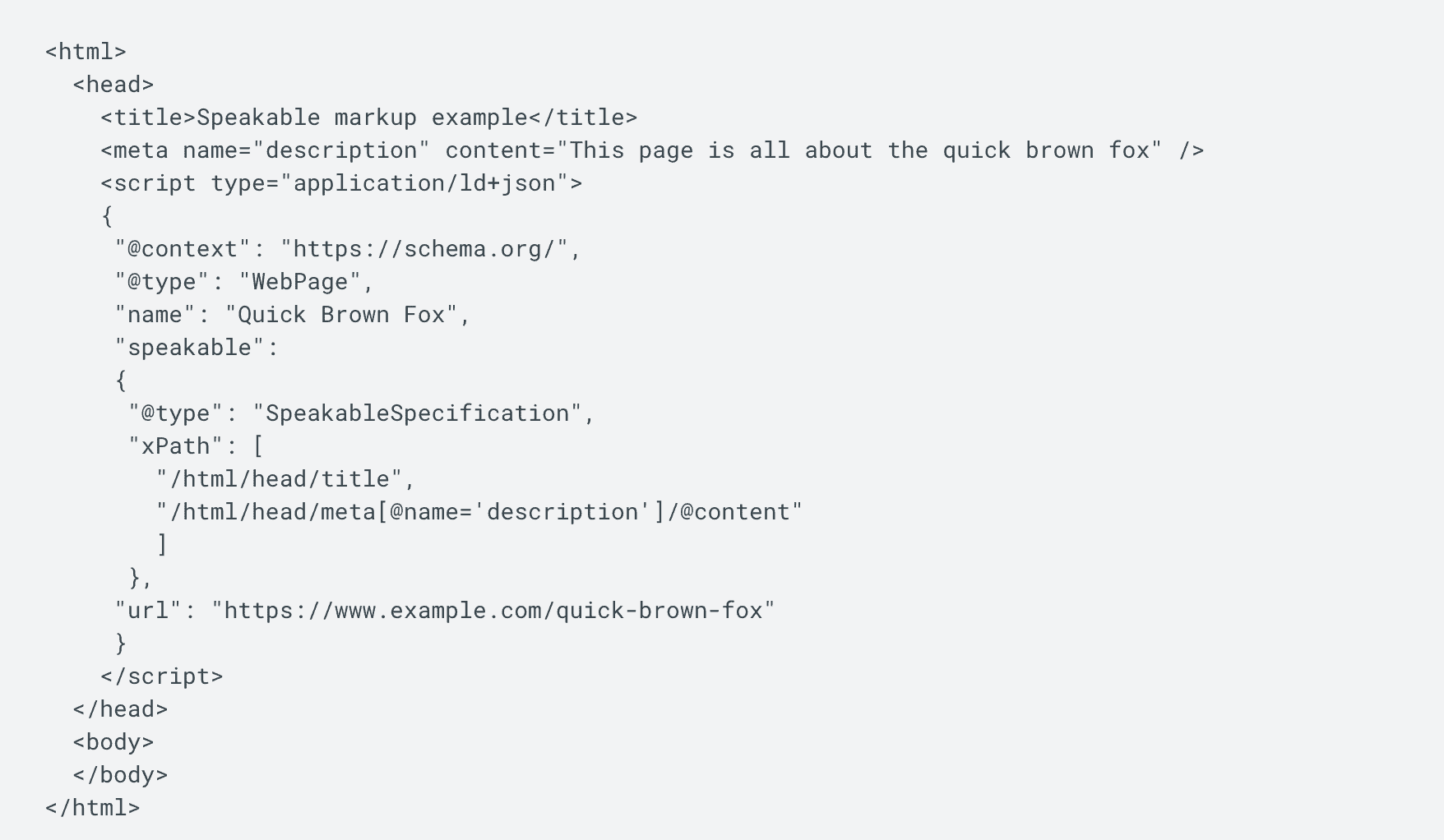
Figure 1: Speakable schema markup defines which parts of a webpage are optimized for voice assistants, enabling AI systems to extract and deliver content as spoken answers.
2. Create Conversational FAQs
Stop writing FAQs that sound like a manual. Write them the way your customers actually ask questions.
| Traditional SEO Query | AEO / Voice Search Query | Optimization Strategy |
| “Parking rates KLCC” | “Eh, expensive or not to park at KLCC?” | Include price comparisons and colloquial phrasing in the answer. |
| “Renew road tax Malaysia” | “How to renew road tax online fast?” | Use step-by-step bullet points that an AI can easily summarize. |
| “Best coffee Petaling Jaya” | “Which cafe in PJ got good wifi for work?” | Optimize for attributes like “Wifi,” “Work-friendly,” and “PJ” (entity). |
Note: While the middle column does not follow standard grammar, generative engines still identify the intent inside each line and reward content that matches this natural phrasing.
d Phone (NAP) data across all directories eliminates this ambiguity and confirms your physical legitimacy.
Figure 2: Google’s “People Also Ask” feature prioritizes conversational, direct answers that match natural user intent.
3. Local Entity Validation
Local context validation serves as the foundation of a successful GEO Malaysia strategy. Search engines demand clear verification of your location and services within the Knowledge Graph. Inconsistencies confuse the algorithm. A footer listing “KL” while the “About Us” page cites “Kuala Lumpur” forces the AI to guess rather than trust. Establishing consistent Name, Address, and Phone (NAP) data across all directories eliminates this ambiguity and confirms your physical legitimacy.
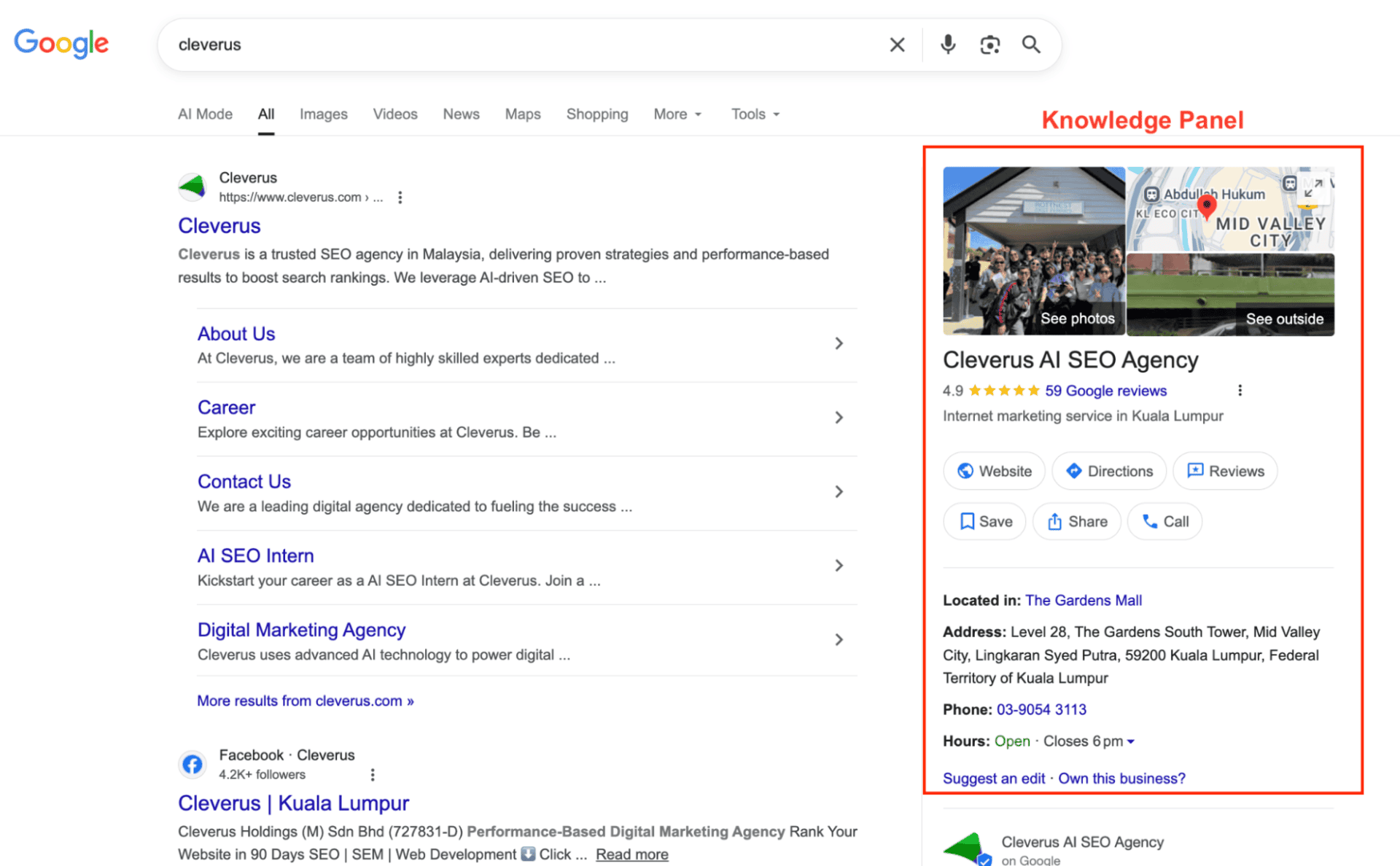
Figure 3: A verified Knowledge Panel confirms your Local Entity status, signaling trust to AI models.
The Multilingual Advantage Beyond Standard English
A common mistake Malaysian brands make is creating a generic “Global English” website to save money. This is a strategic error in the Generative AI age.
If a user asks a question in mixed Bahasa and English, Google’s algorithms prioritize content that matches that linguistic pattern. A generic page optimized for US English will likely be deemed less accurate than a localized page that uses Malaysian context.
Strategic localization differs from writing in broken English. You should embed semantic relevance, such as using local terms naturally within professional content to signal to the Generative Engine that you are the local authority.
Don’t Let Your Brand Get Lost in Translation
Voice search is no longer just about convenience; it is about accessibility and relevance. As AI Overviews continue to dominate the search results, the brands that win will be the ones that stop optimizing for robots and start optimizing for humans, regardless of the language or dialect they speak.
At Cleverus, we know that you shouldn’t have to teach your customers how to speak “proper” English just to find you. Instead, we teach search engines to understand your customers. Our GEO experts specialize in optimizing for the Rojak reality of the Malaysian market, positioning your brand as the clear, audible answer to every local query.
Ready to make your voice heard in the age of AI? Book your free consultation here today and let’s build a strategy that speaks your customer’s language.
References
- DemandSage. Voice Search Statistics 2025: New Global Trends. 2025. Available at: https://www.demandsage.com/voice-search-statistics/
- Search Engine Land. New Google AI Overviews data: Search clicks fell 30% in last year. 2025. Available at: https://searchengineland.com/google-ai-overviews-search-clicks-fell-report-455498